
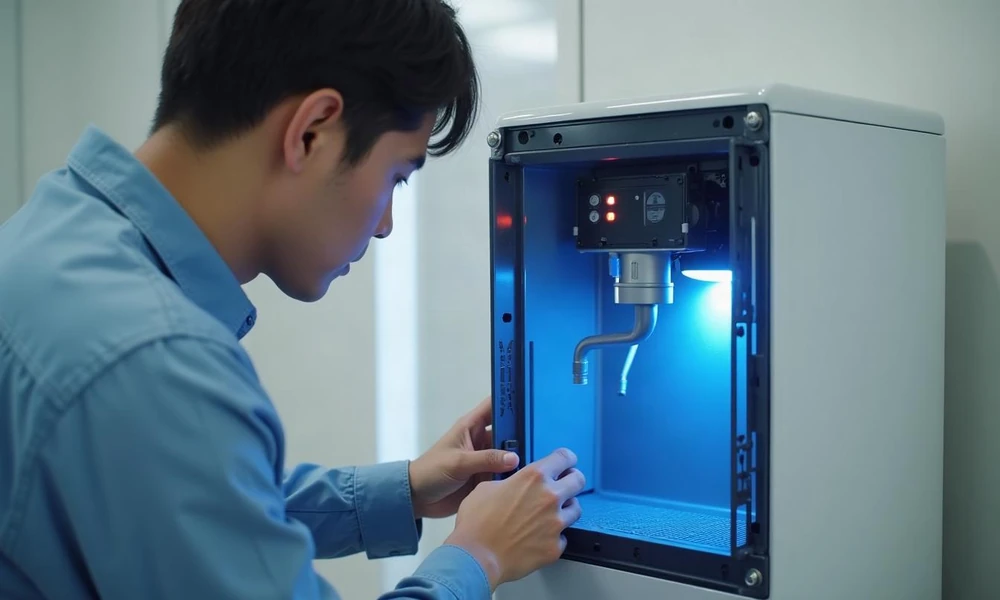
The reassuring thing about UV sterilisation is also the problem with it. Nothing visibly changes when it stops working properly. A UV lamp can continue emitting visible light long after its germicidal output has declined below an effective level, and a dispenser with clogged filters still delivers water that looks perfectly clear and tastes much as it always did. Unlike a leaking tap or a unit that stops cooling, degradation in UV water dispensers in Singapore produces no obvious symptom, which is why maintenance depends on scheduled habits rather than on noticing something is wrong. Four habits carry most of the weight.
1. Replace the UV Lamp on Schedule, Not When It Stops Glowing
UV lamps lose germicidal intensity gradually across their operating life, typically well before they fail to illuminate. Manufacturers specify a replacement interval, commonly measured in operating hours or months, based on when output falls below effective levels rather than when the lamp ceases to function altogether. Waiting for visible failure means running the dispenser for an unknown period with reduced sterilisation, which is precisely the situation the technology was installed to avoid.
Recording the installation date of each lamp and scheduling replacement against the manufacturer’s interval, rather than against appearance, is the single most important habit for a UV unit. It also helps to note the replacement date somewhere visible on the unit itself, since a record kept only in an email thread or a file tends to be forgotten once the person who created it changes roles.
2. Change Filters at Their Specified Intervals
Most dispensers combine UV treatment with sediment and carbon filtration, and these stages work together rather than independently. Filters that are overdue for replacement restrict flow, allow sediment through, and in some cases reduce the water clarity that UV treatment depends on, since suspended particles can shield microorganisms from full exposure to the lamp.
Filter intervals depend on usage volume as well as elapsed time, so a busy office unit serving fifty people needs more frequent changes than a household one used by a family of four. Tracking both usage and date provides a more reliable schedule than date alone, particularly in workplaces where headcount or office attendance patterns have changed since the unit was first installed.
3. Clean Dispensing Nozzles and External Contact Points Regularly
UV treatment sterilises water inside the unit, not the dispensing nozzle where bottles and cups make contact, nor the drip tray where standing water collects. These external points are where contamination most commonly occurs in otherwise well-maintained units, and they sit entirely outside the treatment system’s reach.
Regular wiping of nozzles with appropriate cleaning materials, and emptying and cleaning drip trays, address a risk the internal sterilisation system was never designed to cover. In shared office settings, this is worth assigning to a specific person or including in a cleaning contractor’s scope, since a task that belongs to everyone in general tends to belong to nobody in practice.
4. Schedule Periodic Internal Sanitisation
Even with functioning UV and current filters, internal tanks and lines benefit from periodic sanitisation, particularly in units holding water for extended periods or in offices where usage drops sharply during holiday periods. Water sitting stagnant in lines for a week or more creates conditions that routine operation doesn’t address. Manufacturers generally specify an interval for this service, and it is usually performed by a technician rather than a user, since it involves accessing internal components.
Common Mistakes Worth Avoiding
- Judging UV lamp condition by whether it still glows rather than by operating hours
- Extending filter intervals because water still looks and tastes fine
- Cleaning the exterior casing while neglecting nozzles and drip trays
- Skipping internal sanitisation because the unit shows no visible problem
- Leaving a unit unused for extended periods without flushing before resuming
Keeping a Record That Makes Maintenance Verifiable
The most practical habit underpinning all four is simply keeping a log. A card attached to the unit recording lamp installation dates, filter changes, and sanitisation visits turns maintenance from something someone vaguely remembers into something verifiable at a glance. This matters more in offices, where responsibility for water dispensers in Singapore often shifts between administrative staff over the years, and nobody is certain when the lamp was last changed or by whom. Where maintenance is handled under a service contract, keeping the provider’s records accessible on site serves the same purpose and makes it straightforward to confirm the unit is genuinely being maintained rather than merely visited.
For units installed several years ago with no maintenance history available, the safest starting point is usually a full service including lamp and filter replacement, establishing a clean baseline from which a proper schedule can run.
Contact Pure Water Dispensers to arrange a maintenance schedule that keeps your UV dispenser’s lamp, filters, and sanitisation up to date.
