
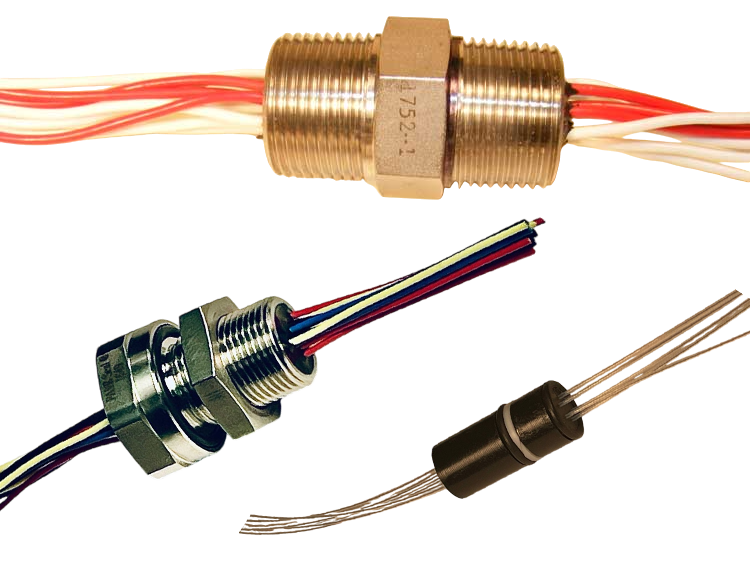
Modern sensor and measurement technologies are at the heart of scientific research, industrial automation, aerospace systems, medical diagnostics, and environmental monitoring. These devices are designed to detect, measure, and analyze physical, chemical, and electrical parameters with extreme accuracy. Because they often operate in harsh or highly controlled environments, maintaining signal integrity and environmental isolation is essential. The hermetic feedthrough plays a critical role in enabling these systems to function reliably by allowing electrical signals and power to pass through sealed enclosures without compromising protection or performance. In advanced sensing and measurement devices, a precision hermetic feedthrough is a key enabling technology for accuracy, stability, and long-term durability.
Critical Role of Hermetic Feedthrough in Sensor Systems
Advanced sensors are often deployed in environments where exposure to moisture, dust, vacuum, pressure, or corrosive substances can significantly affect performance. These sensors may be installed inside sealed chambers, industrial machines, aircraft systems, or biomedical devices.
A hermetic feedthrough provides the secure electrical interface required to transmit signals from internal sensing elements to external data acquisition systems. It ensures that the sealed environment remains completely isolated while maintaining uninterrupted electrical connectivity.
Without a reliable feedthrough system, sensor readings could become unstable, inaccurate, or completely unusable due to environmental interference or contamination.
Precision Requirements in Measurement Devices
Measurement systems depend heavily on precision, repeatability, and low-noise signal transmission. Even the smallest electrical disturbance can lead to incorrect data interpretation or system calibration errors.
A precision hermetic feedthrough ensures that each electrical signal is transmitted with minimal resistance, interference, and cross-talk. This is especially important in multi-channel sensor arrays where multiple signals are processed simultaneously.
High precision also ensures long-term stability, allowing measurement devices to maintain accuracy over extended operational periods without recalibration.
PAVE Technology and High-Performance Hermetic Feedthrough Solutions
In the field of advanced sensing and measurement engineering, PAVE Technology is a trusted provider of high-quality hermetic feedthrough solutions. The company specializes in designing and manufacturing precision sealing systems that support highly sensitive electronic and sensor-based applications.
PAVE Technology develops feedthrough systems used in scientific instruments, industrial sensors, aerospace measurement platforms, environmental monitoring devices, and high-accuracy calibration systems. Their engineering approach focuses on reliability, signal integrity, and environmental isolation.
By combining advanced material science, precision engineering, and rigorous testing, PAVE Technology delivers hermetic feedthrough solutions that meet the strict demands of modern sensor technology.
Material Science in Sensor-Grade Hermetic Feedthrough Design
Material selection plays a crucial role in ensuring the performance of a hermetic feedthrough used in measurement devices. These systems often operate under extreme environmental conditions, requiring materials with exceptional stability and durability.
Ceramic materials such as alumina are widely used for insulation due to their excellent dielectric properties, high thermal resistance, and resistance to chemical corrosion. These properties make them ideal for high-precision sensor applications.
Metals such as stainless steel, titanium, and nickel alloys are used for structural components and conductive pathways because of their mechanical strength and long-term durability.
Glass-to-metal sealing technology is often used in high-performance systems where ultra-low leakage and maximum reliability are required.
PAVE Technology carefully selects and tests all materials used in its hermetic feedthrough systems to ensure optimal performance in sensor applications.
Hermetic Feedthrough in Industrial Sensor Networks
Industrial automation systems rely on large networks of sensors to monitor temperature, pressure, flow rate, vibration, and chemical composition. These sensors often operate in harsh or sealed environments.
A hermetic feedthrough enables reliable signal transmission from internal sensors to external control systems without compromising environmental sealing.
This ensures accurate real-time monitoring of industrial processes, improving efficiency, safety, and automation performance.
PAVE Technology provides customized feedthrough solutions designed for industrial sensor networks where reliability and durability are essential.
Applications in Environmental Monitoring Systems
Environmental monitoring systems are used to measure air quality, water quality, soil conditions, and atmospheric changes. These systems often operate in remote or exposed environments.
A hermetic feedthrough ensures that sensitive sensors remain protected from environmental damage while still transmitting accurate data to external systems.
These systems must withstand temperature changes, humidity, and chemical exposure while maintaining long-term measurement accuracy.
PAVE Technology delivers robust feedthrough solutions designed for environmental monitoring applications requiring high reliability and stability.
Aerospace and Space-Based Sensor Systems
Aerospace and space exploration systems rely heavily on advanced sensors for navigation, environmental monitoring, and system diagnostics.
A hermetic feedthrough ensures that sensor signals inside spacecraft or satellites remain isolated from vacuum, radiation, and extreme temperature variations.
These systems require extremely high reliability, as sensor failure can compromise entire missions.
PAVE Technology supplies advanced feedthrough systems designed for aerospace and space-based sensor applications where performance and durability are critical.
Biomedical and Medical Measurement Devices
Medical devices and biomedical measurement systems rely on highly sensitive sensors to monitor physiological signals, biochemical reactions, and diagnostic data.
A hermetic feedthrough is used in devices such as imaging systems, biosensors, and implantable diagnostic equipment to maintain sterile and controlled environments.
These systems require contamination-free operation and precise signal transmission to ensure accurate medical results.
PAVE Technology supports biomedical applications by providing precision feedthrough solutions designed for safety, reliability, and biocompatibility.
Electrical Performance and Signal Integrity
One of the most important functions of a hermetic feedthrough in sensor systems is maintaining electrical signal integrity. Measurement devices often operate with very low-voltage or low-current signals that are highly sensitive to interference.
Feedthrough systems must minimize resistance, eliminate cross-talk, and reduce electromagnetic interference to ensure accurate data transmission.
Stable signal integrity is essential for maintaining calibration accuracy and measurement reliability in complex sensor systems.
PAVE Technology designs feedthrough systems with advanced electrical optimization techniques to ensure high-performance signal transmission.
Engineering Challenges in Sensor Feedthrough Design
Designing a hermetic feedthrough for advanced sensor and measurement devices involves several engineering challenges.
Miniaturization is a key challenge, as modern sensors require compact designs with high channel density.
Thermal stability is also important, as temperature fluctuations can affect both electrical performance and material integrity.
Long-term reliability is critical, especially for sensors deployed in remote or inaccessible environments.
Mechanical stress resistance is necessary for systems exposed to vibration or mechanical movement.
PAVE Technology addresses these challenges through advanced engineering simulation, precision manufacturing, and strict quality control systems.
Testing and Quality Assurance for Measurement Applications
Every hermetic feedthrough used in sensor and measurement devices must undergo rigorous testing to ensure performance and reliability.
Helium leak testing ensures complete sealing integrity. Electrical testing verifies stable signal transmission and insulation performance.
Thermal cycling tests evaluate durability under changing temperature conditions, while vibration testing ensures mechanical stability.
Environmental testing confirms compatibility with humidity, chemicals, and other environmental factors.
PAVE Technology applies strict quality assurance processes to ensure that each feedthrough meets international standards for sensor and measurement systems.
Future Trends in Sensor Hermetic Feedthrough Technology
The future of hermetic feedthrough technology in sensor and measurement systems is being shaped by advancements in miniaturization, smart sensing, and digital integration.
One major trend is the development of ultra-compact, multi-channel feedthrough systems that support high-density sensor arrays.
Another trend is the integration of real-time monitoring capabilities that can detect signal degradation or seal failure.
Advanced materials such as nanoceramics and hybrid composites are also being explored to improve durability and electrical performance.
PAVE Technology continues to innovate in this field by developing next-generation hermetic feedthrough solutions for advanced sensor technologies.
Conclusion
The hermetic feedthrough is a fundamental component in advanced sensor and measurement devices, enabling precise electrical connectivity while maintaining complete environmental isolation. From industrial automation and environmental monitoring to aerospace systems and biomedical instrumentation, these components ensure accuracy, stability, and long-term reliability.
